v
Wisdom Tooth Removal in Newtown – Safe & Painless Tooth Extraction Procedure
Introduction
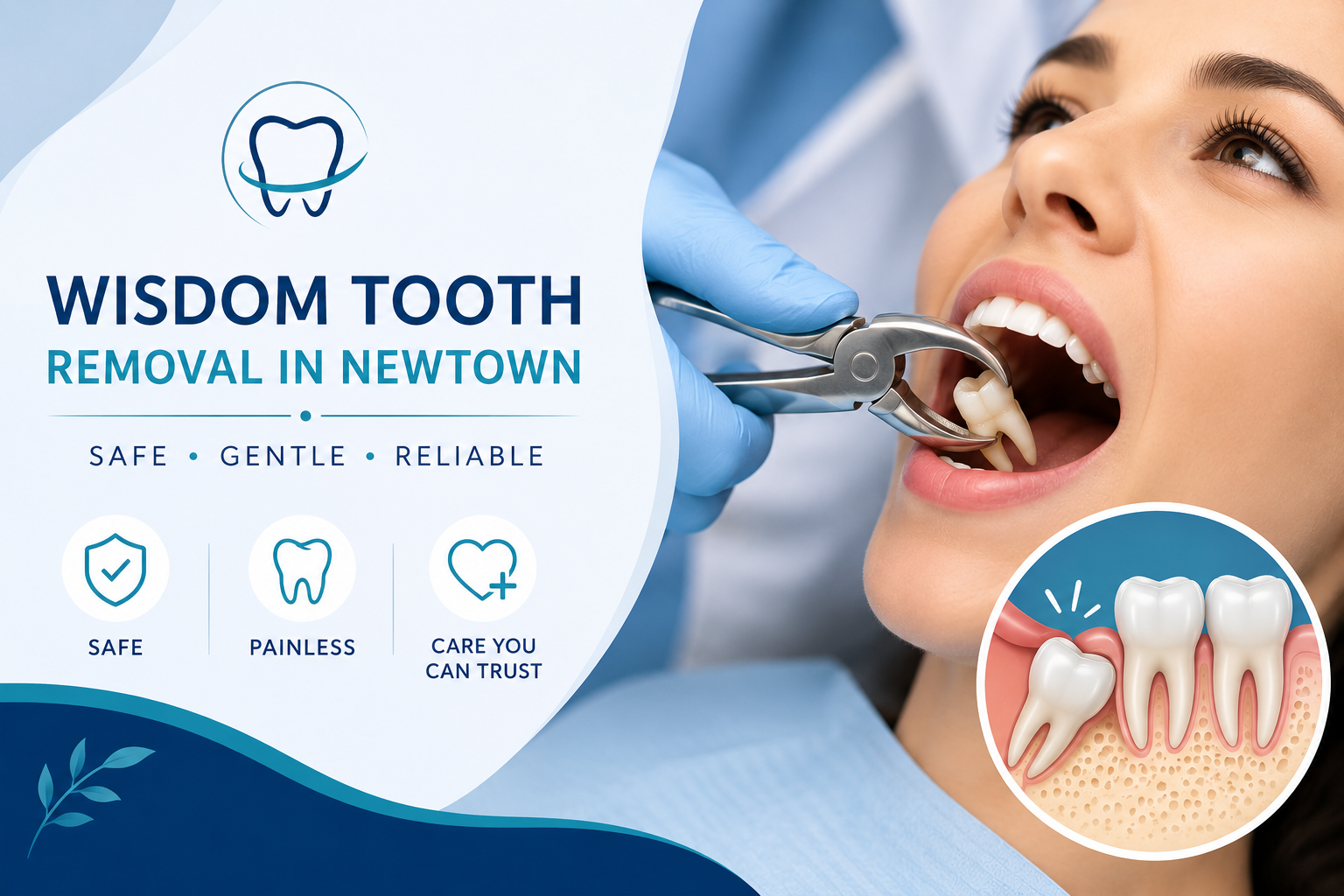
Tooth extraction is one of the most common dental procedures performed to protect and maintain oral health. While dentists always strive to save natural teeth whenever possible, extraction may become necessary when a tooth is severely damaged, infected, impacted, or causing complications for surrounding teeth. Among the most frequently performed procedures is wisdom tooth removal in Newtown, as wisdom teeth often lack sufficient space to erupt properly.
Modern dentistry has transformed tooth extraction into a safe, efficient, and virtually painless procedure. With advanced diagnostic tools, effective local anesthesia, and minimally invasive techniques, patients can undergo treatment comfortably and recover quickly.
When Is Tooth Extraction Necessary?
A dentist may recommend tooth extraction in the following situations:
-
Severe tooth decay that cannot be restored with a filling or root canal treatment.
-
Advanced gum disease causing tooth mobility.
-
Impacted wisdom teeth.
-
Fractured teeth beyond repair.
-
Orthodontic treatment requiring space creation.
-
Recurrent dental infections.
-
Overcrowded teeth affecting alignment.
Early intervention helps prevent complications such as infection spread, bone loss, and damage to neighboring teeth.
Why Is Wisdom Tooth Removal Important?
Wisdom teeth, also known as third molars, usually erupt between the ages of 17 and 25. In many individuals, there is insufficient space in the jaw to accommodate these teeth. As a result, they may become partially erupted or completely impacted.
This is why wisdom tooth removal in Newtown is commonly recommended for patients experiencing:
-
Pain or discomfort at the back of the mouth
-
Swelling around the gums
-
Difficulty opening the mouth
-
Food impaction around wisdom teeth
-
Repeated infections
-
Damage to adjacent teeth
-
Cyst formation around impacted teeth
Removing problematic wisdom teeth at the right time can prevent long-term oral health issues and preserve surrounding structures.
Is Tooth Extraction Painful?
One of the biggest concerns among patients is pain during treatment. Fortunately, modern extraction procedures are designed to be as comfortable as possible.
Before the procedure begins, the treatment area is thoroughly numbed using local anesthesia. Patients may feel slight pressure during the extraction but should not experience pain. For anxious individuals, additional sedation options may also be available.
Following the procedure, mild discomfort and swelling are normal and can usually be managed with prescribed medications and proper post-operative care.
What Happens During Wisdom Tooth Removal?
The procedure generally involves the following steps:
1. Clinical Examination
The dentist evaluates the tooth and surrounding tissues.
2. Digital X-Ray Assessment
An X-ray helps determine the position of the wisdom tooth and its relationship with nearby structures.
3. Administration of Local Anesthesia
The area is numbed to ensure a comfortable experience.
4. Tooth Removal
Depending on the position of the tooth, the dentist may perform a simple extraction or a minor surgical extraction.
5. Post-Operative Instructions
Patients receive detailed guidance to support healing and minimize complications.
The entire process is typically completed in a single appointment.
Benefits of Wisdom Tooth Removal
Choosing timely wisdom tooth removal in Newtown offers several advantages:
-
Prevents recurrent infections
-
Reduces pain and swelling
-
Protects neighboring teeth from damage
-
Prevents overcrowding
-
Maintains better oral hygiene
-
Reduces the risk of cyst development
-
Improves overall oral health
Early treatment is often simpler and associated with faster recovery.
Recovery After Tooth Extraction
Most patients recover smoothly within a few days. Following your dentist’s instructions is essential for proper healing.
Tips for Faster Recovery
-
Bite gently on the gauze as advised.
-
Avoid vigorous rinsing for the first 24 hours.
-
Eat soft foods such as yogurt, soup, and mashed potatoes.
-
Stay hydrated.
-
Avoid smoking and alcohol.
-
Take medications as prescribed.
-
Maintain oral hygiene while avoiding the extraction site initially.
Mild swelling and discomfort typically subside within a few days.
Why Choose Professional Wisdom Tooth Removal in Newtown?
Professional dental care ensures accurate diagnosis, safe treatment, and proper follow-up. Experienced dentists utilize modern equipment and evidence-based techniques to provide comfortable treatment and minimize complications.
Whether you require a routine extraction or surgical removal of an impacted tooth, seeking timely professional care can help prevent future dental problems and restore your comfort and confidence.
Frequently Asked Questions (FAQs)
1. How do I know if I need wisdom tooth removal?
Common signs include pain, swelling, recurrent infections, difficulty chewing, jaw stiffness, and food trapping around the wisdom tooth area. A dental examination and X-ray can confirm whether extraction is necessary.
2. Is wisdom tooth removal painful?
No. Local anesthesia ensures that the procedure is comfortable and painless. Mild soreness after the procedure can usually be managed with medications.
3. How long does wisdom tooth removal take?
Most procedures take between 20 and 60 minutes, depending on the complexity and position of the tooth.
4. How many days does recovery take?
Initial healing usually occurs within 3–7 days, while complete healing may take several weeks.
5. Can I eat after the extraction?
Yes. Soft foods are recommended for the first few days. Avoid hard, spicy, and crunchy foods during the initial healing period.
6. What happens if an impacted wisdom tooth is left untreated?
Untreated impacted wisdom teeth may cause pain, infection, gum disease, damage to adjacent teeth, cyst formation, and crowding.
7. Is wisdom tooth removal safe?
Yes. When performed by a qualified dental professional, wisdom tooth removal in Newtown is a safe and routine procedure with a high success rate.
Conclusion
Tooth extraction and wisdom tooth removal in Newtown are safe, effective procedures that help eliminate pain, prevent complications, and protect long-term oral health. If you are experiencing discomfort, swelling, or recurring infections associated with wisdom teeth, consult a dental professional for a comprehensive evaluation and personalized treatment plan.